Community Feature
Inside the Beltline
If you're shopping Five Points, Hayes Barton, Drewry Hills, or the Village District, understand what you're really buying: some of the most contested land in North Carolina. On many of these streets, a quarter-acre lot appraises higher than the house standing on it.
What that means for you: the lot's position matters more than the house's finishes — the street, the setbacks, the oaks that took eighty years to grow, the walk to downtown. Teardowns and custom builds are rewriting these blocks one lot at a time — you'll find these streets in the land-value data below.
Houses here run from the '20s through the '60s — some lovingly kept, some headed for a bulldozer. Before you fall for either kind, find out which one you're standing in — it changes what the right offer looks like.
Block by Block
Five Points. Named for the five-way meeting of Glenwood, Fairview, and Whitaker Mill, this is the social hub of the Beltline — and technically five historic neighborhoods in one: Hayes Barton, Bloomsbury, Georgetown, Roanoke Park, and Vanguard Park, all platted in the 1910s and '20s. The commercial node packs coffee shops, restaurants, and the Rialto — the 1942 theater, freshly restored, now running films and live shows under its old marquee. Bungalows and foursquares dominate, Roanoke Park gives kids somewhere to be, and homes here often sell before the sign goes in the yard. Go on a Saturday morning and you'll see why.
Hayes Barton. The grandest of the old neighborhoods, named for Sir Walter Raleigh's birthplace in England and built out in the 1920s as the streetcar era's showcase — stately brick and slate on curving, canopied streets. This is where Raleigh's early money built to stay, and it shows in the lot widths. Some of the highest land prices in the city, a walk from the Five Points node, and the supply never grows.
Drewry Hills. Mid-century homes on some of the biggest wooded lots inside the Beltline, rolling down toward Crabtree Creek near the old Lassiter Mill falls. The greenway is at the end of the street, North Hills is five minutes away, and the lots are wide enough that custom builders circle the neighborhood like it's a buffet. Quieter than Five Points, less famous than Hayes Barton, and one of the most expensive places in Raleigh to buy land — it just doesn't advertise it.
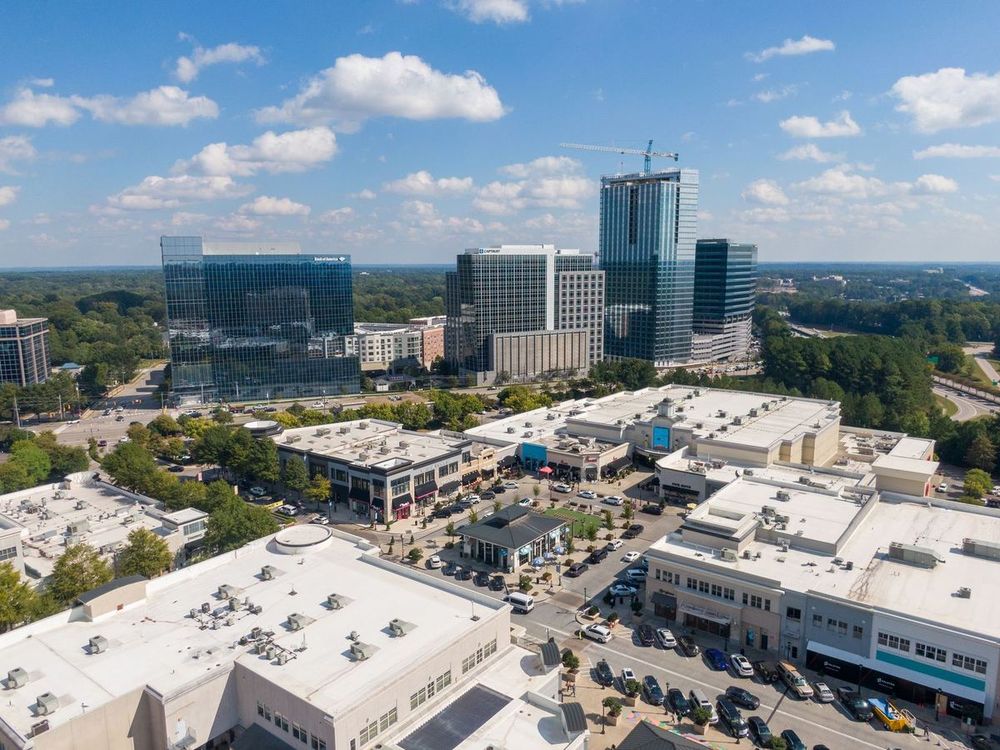
The Village District. Built around what generations knew as Cameron Village — one of the Southeast's first shopping centers when it opened in 1949, renamed the Village District in 2021, though plenty of locals never switched. Groceries, retail, and restaurants sit in the middle of it; the historic homes of Cameron Park and the edge of NC State sit around it. Housing runs the full range here — apartments, condos, cottages, and serious historic houses — which makes it the rare close-in spot with an entry point at almost every budget. It's also the part of the Beltline where errands genuinely don't require a car.
Glenwood. Glenwood South is the night-out strip — restaurants and bars in converted warehouses anchored by 42nd Street Oyster Bar, with condos and townhomes overhead if you want the city at your door. The Smoky Hollow development brought a downtown Publix to Peace Street, which quietly changed what living down here means day to day. And the avenue itself is a tour of the city: it starts downtown, runs the Five Points intersection, and keeps going past Crabtree all the way to the Angus Barn. You could eat your way up Glenwood for a month without repeating.
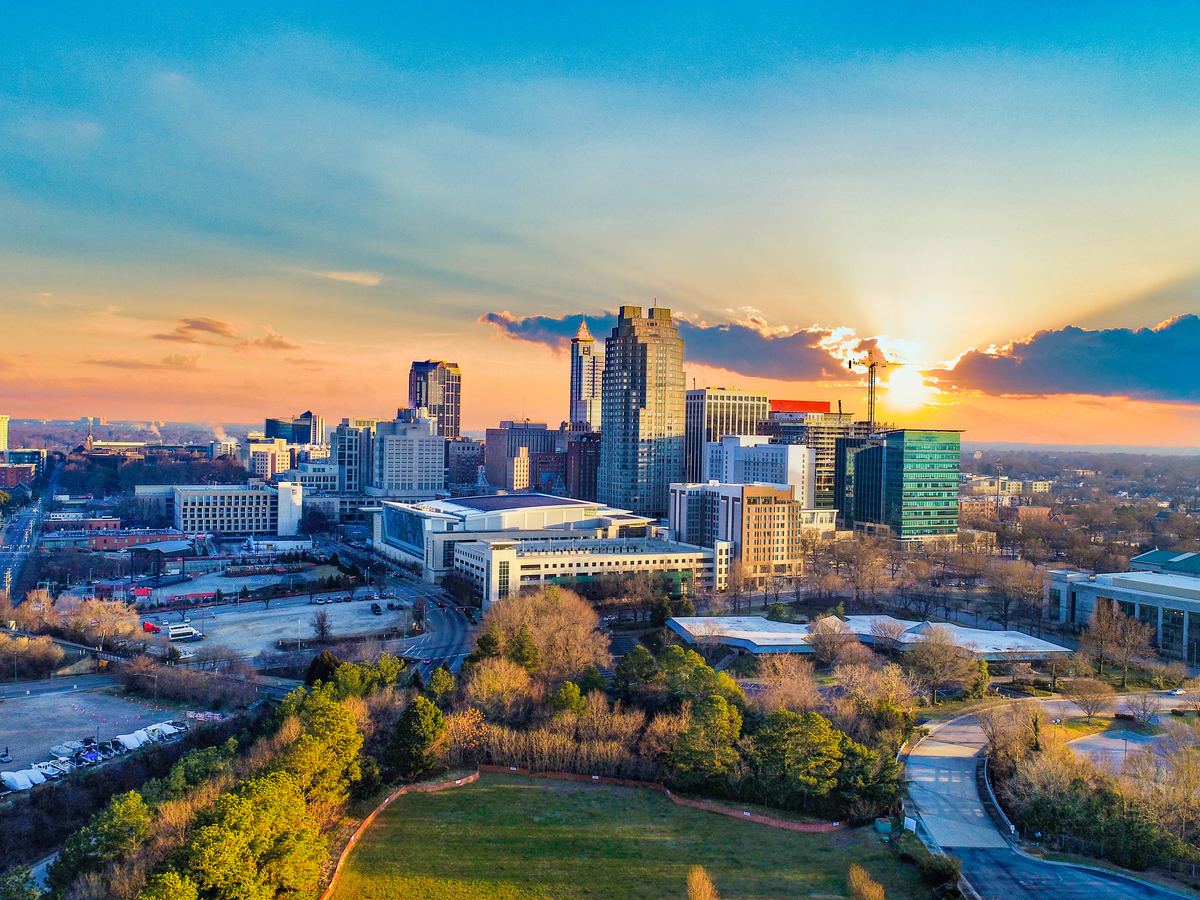
Downtown & the historic districts. Fayetteville Street's towers and museums anchor it, but the living happens in the neighborhoods around it. Historic Oakwood is the Victorian district — gingerbread porches and a candlelight home tour every December that's been running for fifty years. Boylan Heights' bungalows look across the tracks at the skyline and throw an art walk each winter. Mordecai wraps around Raleigh's oldest home still on its original ground, with the Person Street shops as its corner store. Condos and the warehouse district if you want new; porches and picket fences if you want history — downtown gives you both within a fifteen-minute walk of each other.
Eat & Drink
- The Mecca — Raleigh's oldest, slinging diner classics on Martin St since 1930
- 42nd Street Oyster Bar — Glenwood South's anchor since 1931
- Clyde Cooper's BBQ — Eastern NC 'cue since 1938
- The Roast Grill — hot dogs since 1940; don't ask for ketchup
- Players Retreat — the Oberlin Rd institution since 1951
- Char-Grill — drive-up burgers since 1959, Hillsborough St original
- Angus Barn — the special-occasion barn up Glenwood Ave since 1960
- Piccola Italia — family-run in the Village District for 40+ years
- Poole's Diner — the modern downtown classic
- Lilly's Pizza — Five Points since the '90s
- Bida Manda — the Laotian kitchen that put downtown on food maps
- Brewery Bhavana — beer, dim sum, books
- Raleigh Times Bar — downtown's reliable old newsroom
Schools
Wake County Public Schools, with downtown magnet options and Broughton — the 1929 high school ITB families know. Assignments change: verify the exact address with WCPSS before you write an offer.
Worth Knowing
- Village District shops & groceries, walkable
- Raleigh greenway access at Fallon & Fred Fletcher parks
- Five Points' small commercial node — coffee to cocktails
- Glenwood South — the bar-and-restaurant strip for a night out without leaving the Beltline